
“Bubby, if you ain’t got love, you’ll stop breathing and pass the heck out.”
If there’s one thing in this world I love, it’s playing obscure video games. When it comes to hidden gems, the original PlayStation is no slacker because that bad boy had some 4000 games in its library. Speaking as somebody who has been playing catchup on the library since the mid-2000s, I can safely say the PS1 has some of the most underrated games ever released. So here are 10 PS1 games I enjoyed, ones you probably won’t find anybody else talking about. Maybe you’ll hear about them on an iceberg chart, and maybe they’ll them pop up in “weirdest games ever” lists, but good luck finding somebody who actually played through them in their entirety.
#10: Gobli’s Quest
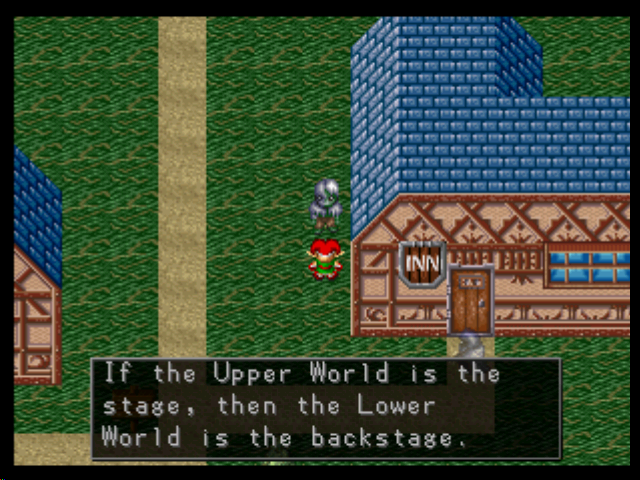
Few people are aware RPG Maker was on the PS1, and even fewer know it came with a sample game called Gobli’s Quest. When it comes to sample projects in game-builder engines, the first thing that springs to mind is usually tech demos. On a whim, I decided to check out the PS1 RPG Maker sample project and much to my surprise, it was a perfectly solid standalone game.
Gobli’s Quest is far from a mere tech demo. It is a fully fleshed out story which parodies the RPG genre. The main character is not a D&D-inspired wizard, nor is he a Goku copy-paste with a different hair colour. Instead, he is the weakest enemy in a medieval RPG world, but his wish in life is to become a main character. Along the way, he encounters sample shopkeepers, generic animals like a cat who wishes to become a final boss, and so forth.
Generally, a game like this is carried entirely by its plot and dialogue. While the premise is amusing in its own right, it is surprisingly well integrated into the core gameplay. See, Gobli’s Quest is actually an extremely hard game, at least compared to the vast majority of turn-based RPGs I’ve played. Gobli’s Quest forces the player to battle against sample enemies with otherworldly stats, stats that far eclipse the player’s own. Even I, a person who generally hordes 99 megaelixirs for an entire RPG and then only uses 5 during the true final boss, had no choice but to spam healing items against random mobs in this game.
At a solid 5 or 6 hours long, Gobli’s Quest presents an experience that is unique even for an RPG today, and it does not overstay its welcome in the slightest. Any fan of RPG Maker should check this out.
#9: Net Yaroze Collection
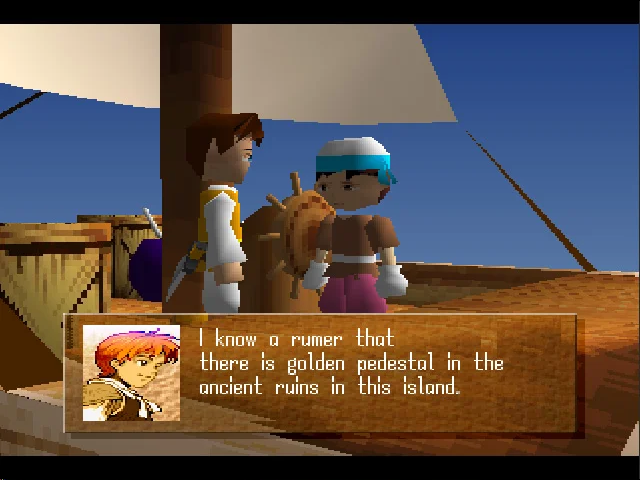
Net Yaroze was a development kit for the PS1 aimed at programming hobbyists. It allowed any indie creator to create a simple PS1 project, and over the years various download links have popped up with project collections.
Want to see what an indie Zelda-like game looks like on actual PS1 hardware with texture warping and all that jazz? Peep Terra Incognita, a small title any developer would struggle to replicate with the Unity engine. Want to play a 3D conversion of Pac-Man for PlayStation? Enjoy the legally distinct The Incredible Coneman. There’s even a blatantly stolen game of Columns creatively renamed to… Columns. They don't make them like they used to, for better or for worse!
Is it cheating to include Net Yaroze Collection here? Sure. But let’s be real, nobody will come out of the experience with 52 new favourite games. Much like with UFO 50, the entire appeal is digging through a huge collection of games and playing each one for a few minutes to get a sense for what indie development for a retro system was like at the time. No modern SDKs required. If you have an hour or two to kill, it’s a fun time for certain.
#8: Kamen Rider Kuuga
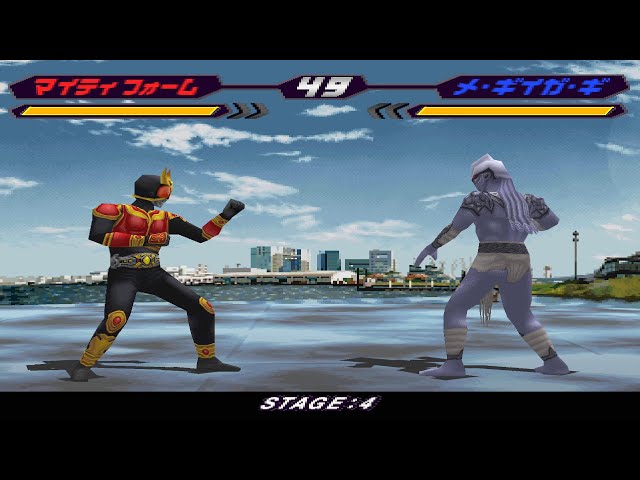
Kamen Rider Kuuga has always been one of my favourite tokusatsu shows, so naturally I was very curious about the PS1 game. To my surprise, it turned out to be a 3D fighting game with playable characters such as red Kuuga, purple Kuuga, blue Kuuga, white Kuuga, black Kuuga, and green Kuuga. Oh, and some monsters of the week from the show.
Did I mention the source material was the final Kamen Rider season to feature a solo rider? I suppose Ichijo could’ve been a joke character who just shoots everybody with a magnum revolver but dies in one hit. Maybe that would’ve been fun.
Regardless, I find Kamen Rider Kuuga very interesting in that it faithfully tries to recreate the first half of the show, albeit in an unlikely genre. There is a story mode which loosely follows the structure of the series. If Kuuga loses a fight in the TV show, then the player must survive until the timer ends in the equivalent fight in the PS1 game. If Kuuga kills somebody with a sword stab so intense it makes the monster explode in the TV series, then the player must perform a Mortal Kombat-style sword fatality to progress through that monster's encounter in story mode. All while music from the TV show plays. Awesome!
Trying to faithfully adapt the source material into a fighting game is very much a case of fitting a square peg into a round hole, right down to the Rider Kick having 200 frames of startup rather than being adapted into a more natural dive kick like in other fighting games. But it’s still a really fun time for Kuuga superfans.
#7: Super Tokusatsu Taisen 2001
I’m a big fan of Super Robot Wars, and I’m also a big fan of tokusatsu if it wasn’t obvious already. I always wondered why there weren’t more tokusatsu games in the vein of Super Robot Wars. Sure, there’s the hilarious parody game Hero Senki: Project Olympus for SFC (which I hope to cover in another blog one day) and a series of decentish SD Great Battle games. However, for SRPGs, pickings are slim.
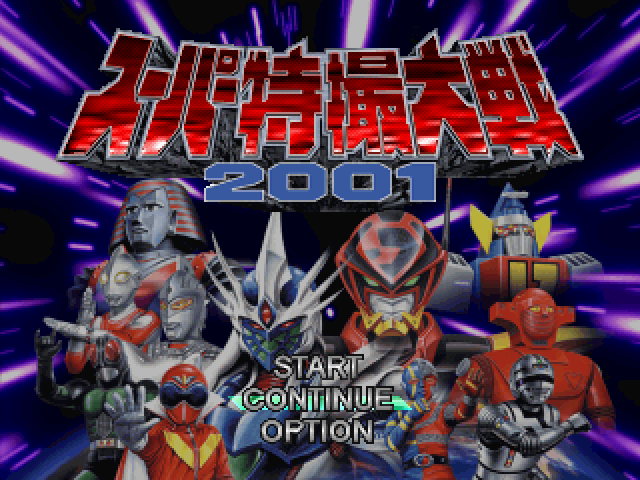
Enter Super Tokusatsu Taisen 2001 which tried to shake up the scene. It never took off the way Super Robot Wars did, but it’s a charming little game in the moment. Perhaps it’s memorable to me not in spite of its aggressively low budget, but because of it. Super Robot Wars games are known for recreating iconic mecha animations for their special attack sequences. Super Tokusatsu Taisen 2001 is unique in that it instead mostly relies on copy-pasting footage from the original shows as ultra low quality FMVs. At least there are instrumental remixes of OPs from most shows represented, and they don’t sound half bad either.
It’s a bit of a tough game, and there’s no translation, but if you ever wanted to have an SRPG party where Kamen Rider Black RX joins forces with Android Kikaider and Ultraseven, this is your randomly acquired game to stumble through as you lament the fact you’re forced to rely on a Google Lens + Google Translate setup.
#6: Gamera 2000
… I promise this is the last tokusatsu game on the list.
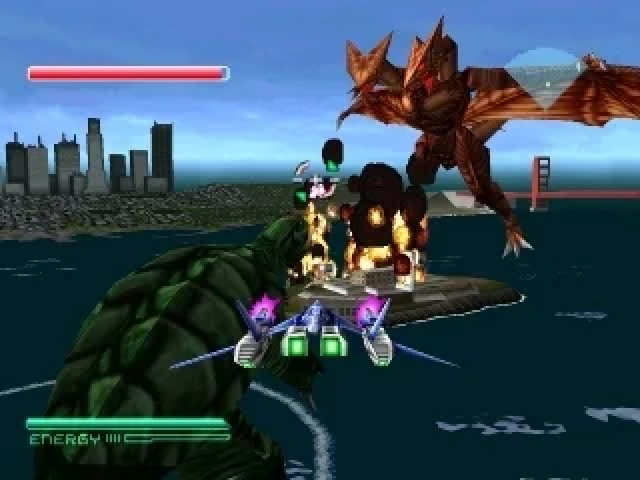
In Japan, the killer app for the Sega Saturn was no doubt the Panzer Dragoon trilogy. The PS1 never quite had a rail shooter that reached the same heights as something like Panzer Dragoon Zwei, sadly. But hey, Gamera 2000 certainly did its best to be “we have Panzer Dragoon at home” for PS1 kids. It has a solid sense of speed with intuitive hitboxes, the difficulty is about on par with Sega’s masterpieces, and Gamera 2000 even has cheesy FMVs that fit the spirit of the Heisei Gamera trilogy.
One weird aspect of this game worth mentioning is that the entire experience is English-friendly. FMVs have English voices, the menus have English text, and so forth. For a Japan-only game, it’s extremely import friendly. If you’re a fan of the films or just rail shooters in general, it’s worth a play.
#5: Evil Zone
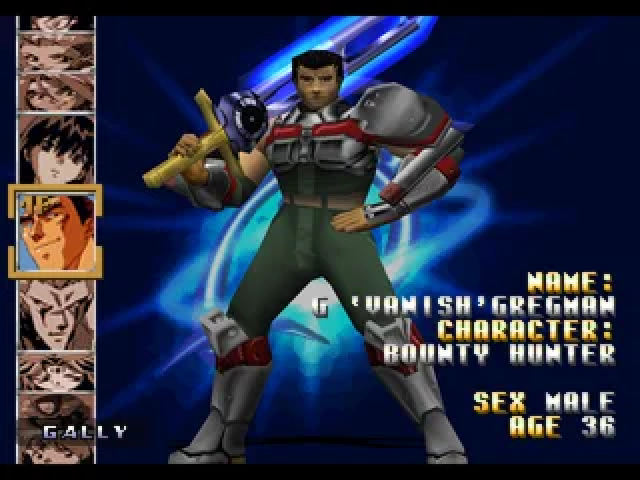
Some video games are so bad they’re good. Evil Zone is not one of those games. Evil Zone is so bad, it’s art.
Imagine a fighting game with only one attack button. The movelist would have to be pretty limited, right? Now imagine if every attack had the same voice clip mapped to it and you had to hear a character shout “I’M NOT EASY” for 30 seconds straight.
That’s basically the Evil Zone experience. But also it has a story mode that’s basically a PowerPoint presentation which tries to be an anime series. The result is what you’d expect. Also there’s a stage where a giant neon sign with the word GAMERS just appears in the background. That’s kinda funny.
Sometimes I don’t want to play some epic masterpiece. Sometimes I just want to play a kusoge where a Guts ripoff slashes up a Gavan ripoff with his Laserblade Dragonslayer. Evil Zone is not what I’d consider a conventionally well-made fighting game by any means, but it doesn’t have to be, either.
#4: Harmful Park
When I was a beginner to the shmup genre, I found myself far more interested in the aesthetic aspects of shmups than the gameplay aspects. So naturally, I clung to cute 'em ups above all else. One of my most nostalgic experiences from that time was playing Harmful Park.
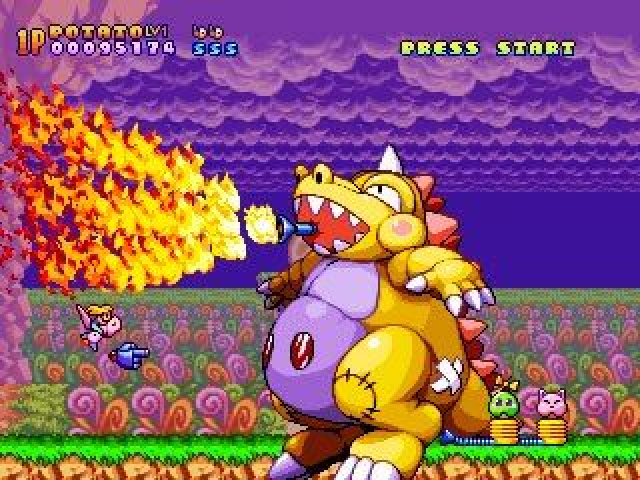
Harmful Park is just a very fun time for so many reasons. The weapons are not laser guns or bombs. The player gets to shield themselves with jelly (called JERRY in the UI) and toss pies at enemies so hard they explode. The difficulty is fairly relaxed by the genre’s standards, and a seasoned shmup player can definitely bang out a 1cc in the span of an afternoon. Yet routing the best time to use shields and knowing which weapons to upgrade still requires the player to rub some brain cells together, so it’s not like the game plays itself either.
With its creative weapons, wacky levels, whimsical music, and cutscenes that feel ripped straight out of a 1990s anime, Harmful Park truly feels like a complete package of a shmup. I recommend it to fans of games like Parodius and anybody who has ever wanted to play a game where rabbits with 5-metre tall drinking glasses can accidentally kill the main character with spilled beer.
#3: Shadow Tower
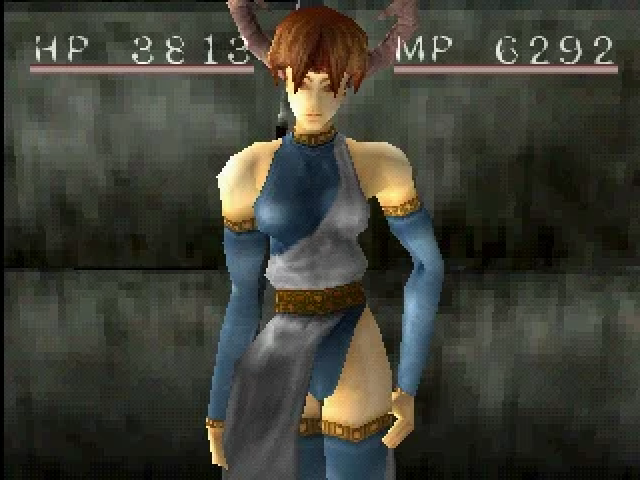
Shadow Tower is definitely one of my two favourite FromSoftware games. I imagine it’s not the most conventionally appealing game in the world, if only for the control scheme which I needed about an hour to adjust to even after forcing Mednafen to accept dual-analog controls. Tangentially, did you know some 3D FromSoftware games like the Armored Core titles didn’t have analog controls even on PS2? They hilariously insisted on d-pad only games for far longer than other 3D developers.
Regardless, once I adjusted to Shadow Tower’s odd control scheme, I found myself hooked to it and couldn’t put it down. I really dig its unique shop system wherein the player can sacrifice health for upgrades. The lack of balancing was almost more of a strength to me than a weakness; I found myself in awe with how many magic builds I could use to break the game.
I’ve always been a big fan of survival horror + RPG hybrids, and while the PS1 has plenty of those to go around such as the much beloved Parasite Eve or Koudelka, it’s a shame Shadow Tower often slips between the cracks. Shadow Tower doesn’t have too much in the way of storytelling the way Parasite Eve does, but it more than makes up for that with its unique gameplay ideas. Equipment is gradually destroyed by all sorts of environmental hazards. For example, I found myself rushing to make it through an acid cave (something something FromSoftware poison swamp joke) because every single step in that cave caused my boots to melt. This made it very tense every single second I explored that area.
However, my favourite part of Shadow Tower is the music. Or rather, the lack thereof. Shadow Tower exclusively uses in-universe audio, which makes its world all the more haunting. As somebody who is easily scared by horror media, words cannot describe how tense I felt to hear a demonic flute gradually become louder and louder in a certain world. It’s peak.
#2: Echo Night
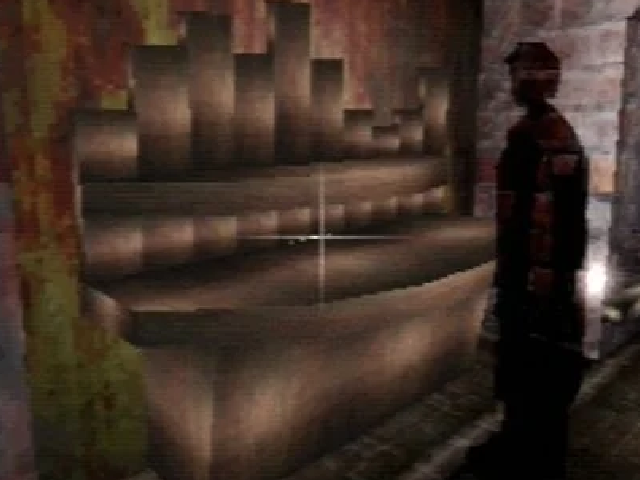
My other favourite FromSoftware game? Echo Night of course! Unlike Shadow Tower, Echo Night is a horror game which actually does emphasize its storytelling.
It’s hard to talk about Echo Night in depth without giving too much of its story away. There really isn’t much to its gameplay loop, after all. Sure, there are some memorable moments like the casino, or the segment which forces the player to rush through a timed escape sequence while their tanky PS1 character refuses to move swiftly, but Echo Night lives and dies by its vibes, its sheer melancholic tone.
As lonely as Shadow Tower felt, Echo Night feels even lonelier. Most of the characters are ghostly NPCs with little in the way of detail. The setting of a boat in the middle of the ocean is brilliant and it pains me more horror games haven’t used that setting. It is hard to think of a more isolated environment than a ship, and as somebody who has never sailed on one, I always associate them with incidents like the sinking of the Titanic or the disappearances in the Bermuda Triangle.
PS1 games always look so otherworldly to me because of the texture warping, generally uncanny low-poly look, and minimal draw distance. PS1 horror games are definitely the scariest to me, like lightning in a bottle. If you’ve already played all the greats from Capcom and Konami, consider giving Echo Night a shot next spooky season.
#1: Moon: Remix RPG Adventure
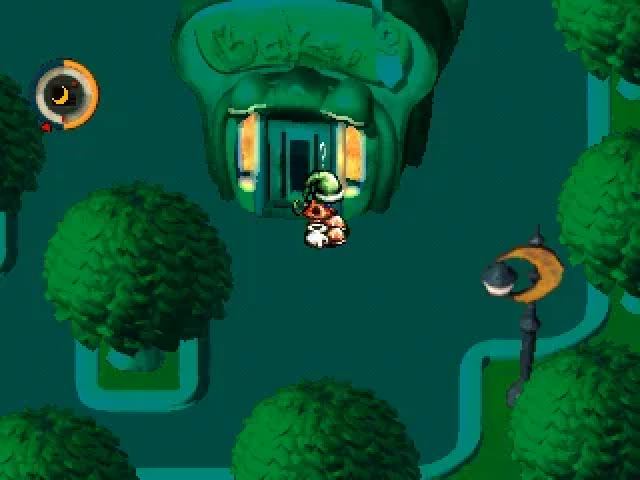
Moon: Remix RPG Adventure is the strangest RPG, because it is both the ultimate anti-RPG and the ultimate love letter to RPG fans. This much is evident even in the first 10 or so minutes of the game, when it begins with jokes about rummaging through the dressers of NPCs and long-winded info dumps that could make Xenogears fans blush.
After the turn of the 21st century, I took note of “deconstruction” media. So many deconstruction works feel like they exist for the sake of a creator airing their contempt for a genre to the world. However, Moon is, by all means, a game that is laughing with RPG fans. Not at them.
By presenting another side of the genre and allowing the player to level up by saving monsters instead of battling them to the death, Moon opens many questions to the RPG fandom. Moon is far from the first RPG to introduce parody elements to the genre (Indeed, Terranigma for the SNES begins with similar jokes about vandalizing NPC homes) but for 1997 especially, the sheer amount of commentary in Moon is astounding.
The shopkeepers in Moon struggle to make ends meet. The player gets to know every single NPC and monster in the game if they so wish to gain their love points. There is an entire day and night cycle, with NPCs behaving differently depending on what time it is. If you have not played it, you owe it to yourself to experience it. The HD rerelease does very little to introduce quality-of-life elements to the game. And to that I say, good. Moon: Remix RPG Adventure is a work of art only a small passionate dev team could bring to life. To touch up its imperfections would only ruin its perfection.
Article edited by A.G. All screenshots sourced from Moby Games.
