
As somebody who regularly plays hardcore video games, there’s one phrase I’ve heard a million times. “This game is impossible!” Obviously, this is almost always hyperbole, especially nowadays. Sure, early arcade games such as Pac-Man and Donkey Kong were meant to loop forever. Perhaps somebody could argue reaching Pac-Man stage 256 qualifies as “beating” the game, but it was not exactly a campaign-based game with a solidified beginning, middle, and ending act. Therefore, it is hard to argue Pac-Man was guilty of ripping off players, especially when the overwhelmingly vast majority of players could never hope to reach level 256 in the first place.
However, sometimes a game with a true campaign mode literally cannot be finished for various reasons. Other times, a game is shipped off with a glitch. Occasionally, things gets broken when porting or localizing a title. And in the worst case scenario, the developers simply gave zero care about the end product.
#1: Robocop (1988)
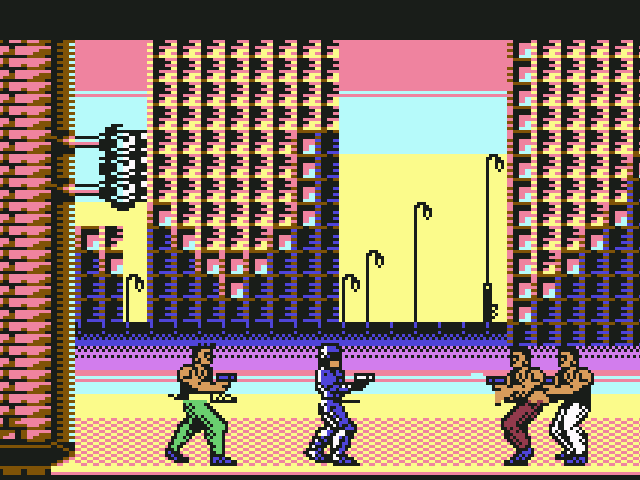
Case in point, Robocop for the Commodore 64. Originally released in 1988 by Ocean, Robocop is notable for two things. The first is its presentation; for a C64 release, Robocop is quite a looker, featuring detailed art screens which look straight out of a movie, a variety of coloured levels, and sprites which can be easily distinguished. The second notable aspect of the game, however, is its sheer brutality towards the player.
The player is only provided a single life to finish the game. Worse yet, their health drains very fast. I wondered why the game was so unforgiving, but it became very obvious to me once I saw a longplay. It turns out the "final" level of the game is completely bugged. Murphy is placed under a time limit so strict, there is no possible way to traverse the map before running out of time. By clipping through walls, it is possible to finish the level early, only for the player to be presented with a garbled mess of pixels:
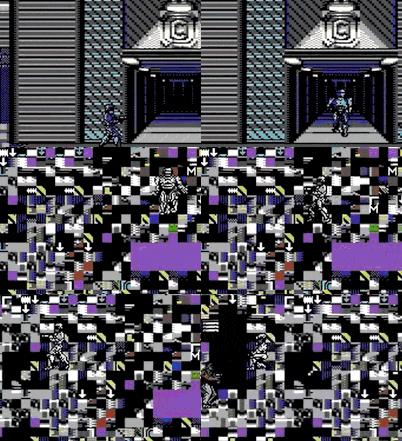
Indeed, the publisher played a cruel trick on purchasers by disguising a completely broken game as an extremely hard game instead. Presumably, there was not enough time to finish the game. A typical fate for licensed games, to be sure.
#2: Teenage Mutant Ninja Turtles (1990)
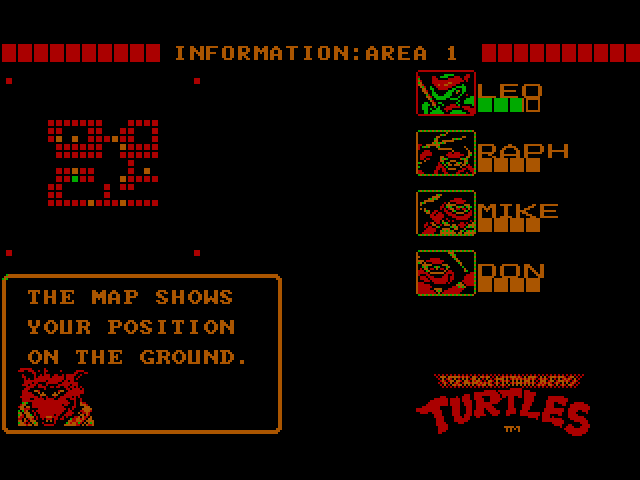
While the original NES release of Teenage Mutant Ninja Turtles is often remembered for its hardcore difficulty, it is obviously far from an impossible game. In the 1980s and 1990s, Konami had something of a policy when it came to releasing games for western markets. Since rentals were perceived as a big hurdle for video game sales in North America and Europe, Konami approached the markets by releasing extremely difficult games with the expectation that children would be motivated to buy the games in order to master them over long periods of time. Now granted, TMNT has some frustrating segments. The most iconic one is definitely the gap which the player needs to walk across instead of jumping over, unlike every other gap in the game. However, the game is still mostly remembered positively. So when the game was ported to DOS, surely that port would be remembered as a certified classic to PC gamers, right?
Well, about the gaps, there's a whole video explaining the bizarre DOS spacing issues in detail.
TMNT was accidentally given an impossible gap to cross when ported to DOS. Nowadays, video games ports are generally run through emulators in the backend. Back then, however, PCs were not powerful enough to emulate their contemporary consoles. As a result, everything in the DOS port was rebuilt from the ground up with new code and assets. This happened often with console to PC ports of games such as Rozner's Mega Man X port, and while it is true those ports often suffered from some glitches or subtly different enemy behaviour, it was rare for them to be released in broken states to the point of being unbeatable. Unfortunately, as TMNT demonstrated, sometimes all it takes is one thing to go wrong during the porting process for the whole collection of dominoes to collapse.
#3: X-Men (1993)
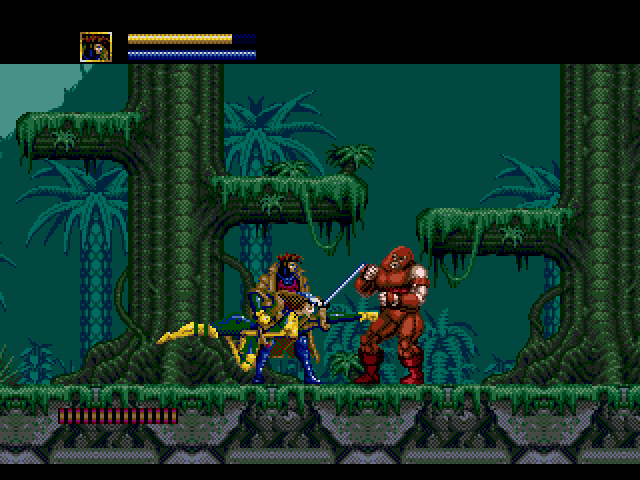
What is it with licensed games and unreachable finish lines? Well, I'm cheating a bit with this entry, as some of you no doubt remember this game's ending. Bear with me a moment.
At one point, the player is placed in a stage with a simple instruction to reset the computer.
Once the player resets their Genesis console, a cutscene is loaded in which Mojo's virus is erased. Simple enough right? Well there's a problem when playing this game on a SEGA Nomad, which was essentially a portable SEGA Genesis. The Nomad completely lacks a reset button unless modified into the system. Therefore, if you were one of the kids unlucky enough to be stuck on the level when gaming on the go, tough luck. This is a good example of a game being unbeatable through no fault of the developers. It is also hard to argue if the Nomad's creators were at fault because they did not account for every single esoteric game mechanic in the Genesis library when designing the system. Regardless, this oversight was too amusing for me to exclude.
#4: Space Station Silicon Valley (1998)
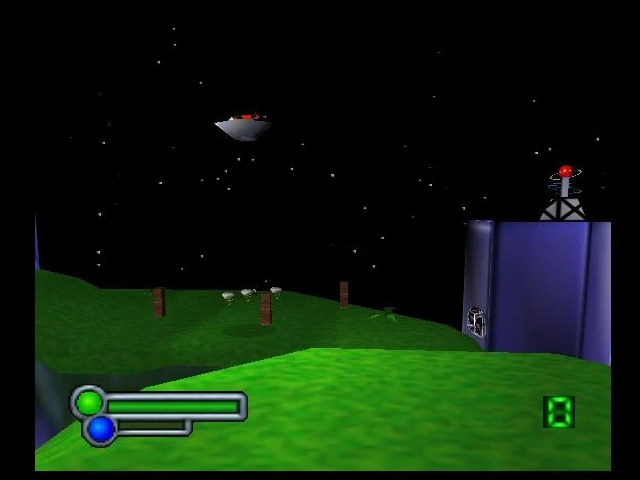
Enough about licensed games, here's a fairly beloved game from DMA Design and Take-Two Interactive. Space Station Silicon Valley can be finished, in the sense the player can reach the credits sequence. However, it is also a collectathon with a somewhat egregious design flaw involving one of its collectibles.
The player cannot actually earn a 100% clear through legitimate means because the golden Fat Bear Mountain trophy has its hitbox coded to 0 rather than 15. This means the player cannot grab it no matter what. Indeed, sometimes a game can be finished, but that a lingering glitch like this can leave it impossible to truly complete. There is, in fact, a fanmade hack which allows the trophy to be collected, but because it is an unofficial patch, SSSV makes for a fine, recognizable addition to this list.
#5: Jet Set Willy (1984)
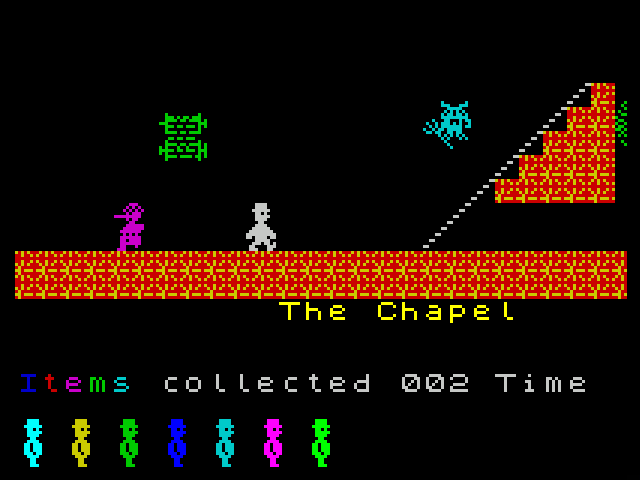
Last but certainly not least, we have what is perhaps the first metroidvania ever created. Jet Set Willy is an extremely buggy game, and no bug is more infamous than its game-breaking attic bug.
After visiting the attic, Willy can no longer enter several rooms which are mandatory to visit before the game is finished. Due to a simple misplaced arrow in the code, the ZX Spectrum version falls apart at its seams. Technically, it is possible to finish the ZX Spectrum version without fixing the attic bug on the first playthrough, but with the caveat that a game's second run cannot be beaten regardless.
If there are any other broken games you would like to see covered in the future, please let us know in the comments!
Articled edited by A.G. All screenshots sourced from Moby Games.
