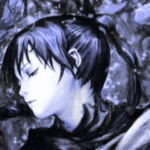
“I robbed convenience stores ’cause I thought they’d make it easier.”
Hey! Come on in and close that door, will you? If you’ve come here, I know exactly what you’re looking for. You are bored beyond belief… but despair not! In the depths of my cave I have accumulated enough knowledge to make sure people of taste such as yourself can discover old gems for many years to come.
The 2000s is an era dear to my heart, so get comfy and let’s
take a dive into five underrated anime from the 2000s!
1) Kino’s Journey: The Beautiful World (Kino no Tabi) (2003)
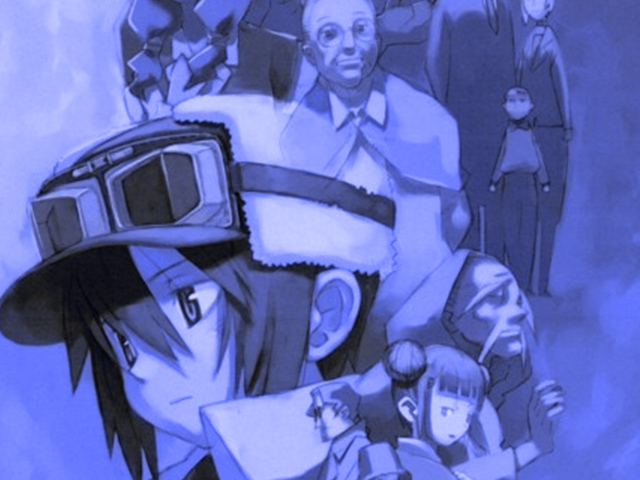
Starting off strong, we have Kino’s Journey (or Kino no Tabi).
Don’t be fooled by the title. The beauty of Kino's world is bittersweet. It is not a classic slice of life. Instead, we follow Kino and her sentient vehicle named Hermes, who is capable of speech and thought. Together they travel around her world, which blossoms beautifully in its raw humanity and philosophical questions it raises to the viewer.
There is a catch though! Kino only stays in one place for exactly three days at a time. She is not a hero nor a villain, but merely an observer just like you and I.
The artstyle seem familiar, there's a good reason. Kino's Journey was directed by Ryūtarō Nakamura (the genius behind Serial Experiments Lain) and features various staff members from that series. Kino’s Journey is a treat, as it respects its viewer's intelligence. It explores concepts without pushing an inherent reading of good or evil, instead letting you decide exactly how you feel about them.
Is the world truly beautiful? Or is it nothing more than an unsolvable collection of imperfections, its rot yet to be revealed? It would be a sin to spoil even a single minute of it, so I hope I was able to stir your curiosity.
2) Haibane Renmei (2002)
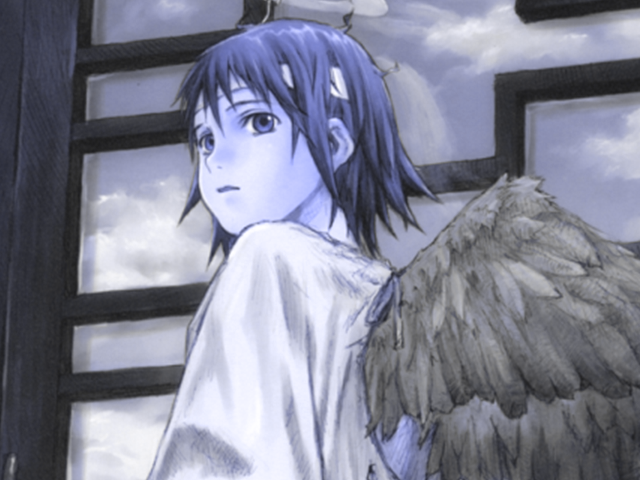
Riding Kino's wave, we move to our next gem. Haibane Renmei (2002).
Now, I know what you may be thinking. “But Fae, we went from a bleak and complex world and now you are giving me something about cutesy angels? They even have a halo and wings! Gubo, we’re leaving!”
Hold your horses.
You could not be more wrong about this. Here, we are talking trauma. We are talking purgatory. We are talking guilt. Created by Yoshitoshi Abe, the character designer for Serial Experiments Lain and Texhnolyze, the core themes we explore here are both “beautiful decay” and “existential dread.” Our angels are denominated “Haibane” and they live in the walled town of Glie.
There is no leaving Glie until your time comes and you may not own any new items. Society in Glie operates like a business, and the Haibane are paid via notebook entries that act as coupons, or perhaps like company scrip, buying only leftovers or second-hand items.
If in Kino’s Journey we were examining the human flaws from the outside, Haibane Renmei takes care of the soul. A “Haibane” may not accumulate wealth, as they are destined to reach the “Day of Flight” in which they are to fly away from the city alone, forever. This kind of materialistic purge, together with examining how each “Haibane” manages their own condition (starting from our protagonist, Rakka), makes Haibane Renmei quite the fascinating piece of media.
Furthermore, those a little more versed in literature may appreciate the fact that Yoshitoshi Abe actually based the core imagery of Haibane Renmei on Haruki Murakami’s famous surrealist novel, Hard-Boiled Wonderland and the End of the World. How do you like them apples?
3) Texhnolyze (2003)
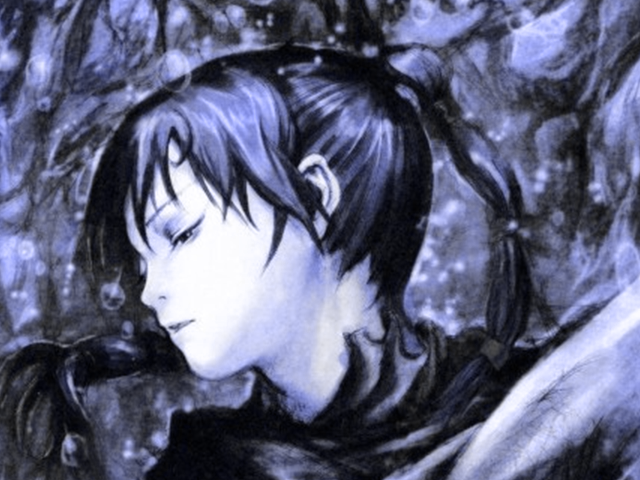
Where should I even start with Texhnolyze? Oh wait! I know! Let’s start with its creative parents.
Texhnolyze is the brainchild of Hiroshi Hamasaki (Steins;Gate), and was written by Chiaki J. Konaka (Serial Experiments Lain, I'm sensing a pattern here...), while featuring character designs by Yoshitoshi Abe. Yep, the gang is all here.
The word "Texhnolyze" itself is a linguistic blend of technology. Techne being the Greek root for art or craft, and Analysis/Lysis meaning to dissolve. The show literally analyzes the dissolution of humanity through technology!
Texhnolyze takes place in Lux, an underground city forgotten by the above ground denizens. Ruled by factions fighting over "Texhnolyze" technology. This includes brutal, painful cybernetic limb replacements which hook directly into the human nervous system. Very cyberpunk indeed, I’m personally a big fan! If you are watching the first episode, no, it is not an anti-piracy measure. That being said, extracting commentary out of the show might prove challenging, given the fact there is very little dialogue across the series.
Industrial noise and visual storytelling are king here; we follow our dear boy Ichise trying to survive in this bleak hellhole of a city. After he is mutilated by a local gang, he is forced to ‘TEXHNOLYZE’ and leave humanity behind.
Where will that take him…? That’s for you to watch!
4) Mononoke (2007)
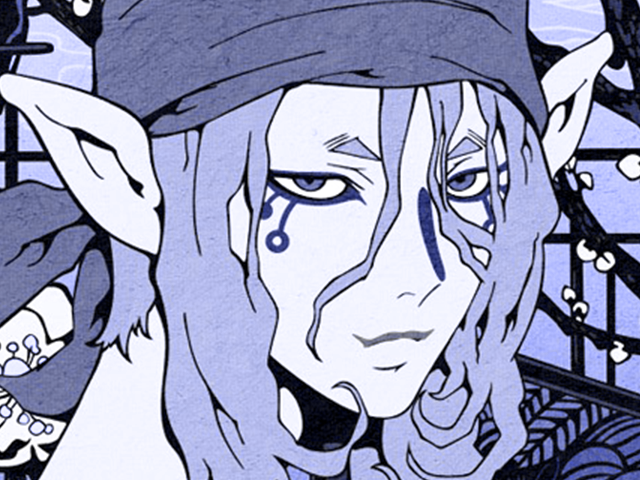
Absolutely do not confuse this with Ghibli’s Princess Mononoke! This little hidden masterpiece’s artstyle is based around traditional ukyo-e woodblock prints, making it a delight for the eyes and mind alike.
The series follows a mysterious, elf-eared wanderer known only as the Medicine Seller. However, he isn’t selling herbs; he carries a sacred, sentient exorcism sword used to slay Mononoke (TITLE DROP!), the unclean spirits that fuse with dark human emotions to terrorize the mortal world. However, the sword cannot be drawn at will.
To unleash it, the Medicine Seller must first play detective and uncover three things; the spirit's Form (What in tarnation is it?), its Truth (The story behind it), and its Reason (Why it seeks vengeance).
However, I must warn you about the garish colors. These may prove to be a little too much for some viewers. Don’t let that dissuade you though, because there are many folkloric references and some of the worst aspects of humanity on display behind the harsh presentation.
Another little content warning, there is some violence towards animals in it. Cover your pooch or kitty’s eyes and ears if they are nearby!
5) Mushishi (2005)
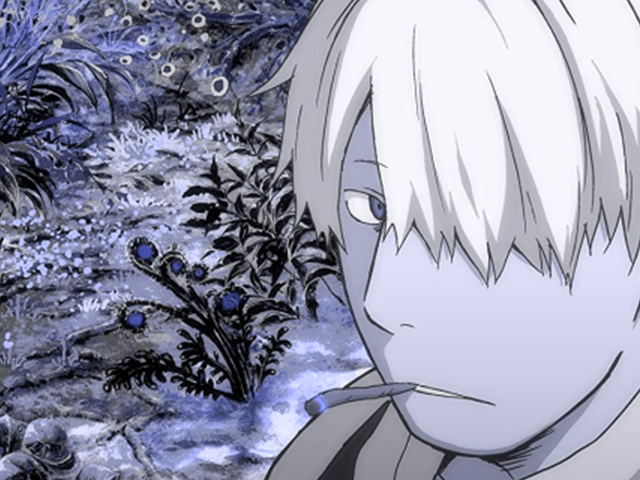
You made this far, so you deserve a nice palate cleanser. Mushishi is far gentler than the other titles we have examined so far. Our protagonist, Ginko, is a Mushi Master. Mushi are not monsters or demons, in fact they are merely a manifestation of life itself. Much like how life clashes with humans quite often, so too do Mushi clash with humanity.
There is no hunting down or defeating the Mushi in this series. Instead, Ginko tries to very sweetly reconcile Mushi with humans and vice versa, making sure they can coexist. This ecologically friendly masterpiece is an example of how, in life, not every problem requires a sword or a magic staff. Sometimes, empathy is the best weapon we have at our disposal.
If Shintoism and contemplation are something you are interested in, or are simply seeking to find some relief from the isekai fatigue, I think you will find this title most compelling.
Article edited by A.G. All pictures sourced from AniList.